
Arsinde (Blanche) de ANJOU [Parents] [scrapbook] 1 was born about 945 in of, , Anjou, France. Arsinde married Guillaume III TAILLEFER about 973 in France.
Siegfried Count of LUXEMBOURG 1 was born about 918 in of, , , Luxembourg. He died on 28 Oct 998. Siegfried married Hedwig Countess of LUXEMBOURG. |
Hedwig Countess of LUXEMBOURG 1 was born about 923 in of, , , Luxembourg. Hedwig married Siegfried Count of LUXEMBOURG. |
They had the following children.
M i Frederic I Count of LUXEMBOURG was born about 945. He died on 6 Oct 1019. F ii
Liutgard Countess of LUXEMBOURG 1 was born about 963 in of, Bruxelles, Brabant, Belgium. She died after 14 May 995.
F iii
Eva Countess of LUXEMBOURG 1 was born about 967 in of, , Luxembourg, Luxembourg. F iv
Kunigunde Countess of LUXEMBOURG 1 was born in 970 in Luxembourg. She died on 3 Mar 1032.
Heribert Count In KINZIGGAU [Parents] 1 was born in 914 in Kinzig, Hessen, Germany. He died in 992. Heribert married Irmintrud Countess of AVALGAU. |
Irmintrud Countess of AVALGAU [Parents] 1 was born in 918 in Avalgau, Germany. Irmintrud married Heribert Count In KINZIGGAU. |
They had the following children.
M i
Udo Von HAMMERSTEIN 1 was born in 940 in of Hammerstein, (now Czarne), Koszalin, Poland. He died on 5 Jun 1036. M ii
Gebhard Count of GLEIBERG 1 was born in 944 in of, Gleiberg, , Germany. He died in 1016. F iii Irmtrud Countess of GLEIBERG was born in 948. F iv
Gerberge Countess of GLEIBERG 1 was born in 950 in of, Gleiberg, , Germany.
Guillaume III TAILLEFER 1 was born about 947 in Toulouse, France. He died in Sep 1037. Guillaume married Arsinde (Blanche) de ANJOU about 973 in France. |
| |
Arsinde (Blanche) de ANJOU [Parents] [scrapbook] 1 was born about 945 in of, , Anjou, France. Arsinde married Guillaume III TAILLEFER about 973 in France. |
They had the following children.
F i Constance de TOULOUSE was born about 986. She died on 25 Jul 1032.
Henri I King of FRANCE [Parents] 1, 2, 3, 4 was born 5 in 1008 in of, Reims, Champagne. He died on 4 Aug 1060 in Vitry, Brie, France. He was buried in Abbaye de Saint Denis, Saint Denis, France. Henri married Anne of KIEV about 19 Jan 1050. |
Anne of KIEV 1, 2, 3, 4 was born in 1037 in Kiev, Ukraine. Anne married Henri I King of FRANCE about 19 Jan 1050. |
They had the following children.
M i Phillip I de FRANCE was born in 1053. He died on 29 Jul 1108. M ii Hugh Magnus FRANCE Duke of France was born in 1057. He died on 18 Oct 1102.
Hugues Magnus, Duke of FRANCE [Parents] 1, 2, 3, 4 was born about 898 in of, Paris, Isle De France. He died 5 on 16 Jun 956 in Dourdan, Isle de France. He was buried in Abbaye de Saint Denis, Saint Denis, Isle de France. Hugues married 6 Hedwige (Hartwige) Princess of The GERMANS before 14 Sep 938 in Mainz Oder, Ingelheim, Rhineland, Germany. |
Hedwige (Hartwige) Princess of The GERMANS [Parents] 1, 2, 3 was born about 922 in of, , Saxony, Germany. She died on 10 May 965 in Aachen, Rheinland, Germany. She was buried on 10 May 965. Hedwige married 4 Hugues Magnus, Duke of FRANCE before 14 Sep 938 in Mainz Oder, Ingelheim, Rhineland, Germany. |
They had the following children.
F i
Bbeatrice Princess of FRANCE 1 was born in 939 in Bourgogne, Champagne, France. She died on 23 Aug 987. M ii Hugues "Capet" King of FRANCE was born about 940. He died on 24 Oct 996. F iii
Emma Princess of FRANCE 1 was born in 943 in France. She died on 19 Mar 968. M iv
Otto Eudes, Duke of BURGUNDY 1 was born in 944 in France. He died on 22 Feb 965. M v
Henri I, Duke of BURGUNDY 1 was born in 946 in France. He died on 15 Oct 1001/1002.
Guillaume III (I) Duke of AQUITAINE [Parents] 1, 2 was born about 929 in of, Poitiers, Aquitaine. He died on 3 Apr 963. Guillaume married Adaele (Gerloc) of NORMANDY. |
Adaele (Gerloc) of NORMANDY [Parents] 1, 2 was born about 897 in of, , Normandie, Neustria. She died after 14 Oct 962. Adaele married Guillaume III (I) Duke of AQUITAINE. |
They had the following children.
F i Adbelahide Princess of AQUITAINE was born in 945. She died in 1004. M ii
Guillaume IV (Fier-aa-bras) AQUITAINE 1 was born about 949 in of, , Aquitaine. He died on 3 Feb 995 in France.
| |
Foulques II "le Bon" Count of ANJOU [Parents] [scrapbook] 1, 2 was born about 909 in of, , Anjou, France. He died on 11 Nov 958 in Tours, Neustria, France. Foulques married Gerberge Du MAINE on 2 Mar 929. |
Gerberge Du MAINE [Parents] 1 was born about 913 in of, Maine, Normandy, France. She died about 952. Gerberge married Foulques II "le Bon" Count of ANJOU on 2 Mar 929. |
They had the following children.
M i
Guy D' ANJOU 1 was born about 932 in of, , Anjou, France. M ii
Drogon PUY 1 was born about 934 in of, , Anjou, France. He died about 934. F iii
Aelips de ANJOU [scrapbook] 1 was born about 936 in of, , Anjou, France. F iv
Adelaide de ANJOU 1, 2 was born about 938 in of, , Anjou, France. M v
Bouchard IV Count of VENDOME 1 was born about 943 in Vendome, Anjou, France. He died in 1012. F vi Arsinde (Blanche) de ANJOU was born about 945. M vii
Geoffroy I "Grisegonnelle" Count of ANJOU 1, 2 was born about 950 in of, , Anjou, France. He died 3 on 21 Jul 987.
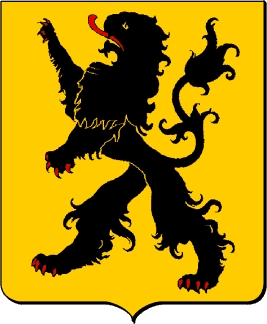 |
Arnoul I, Count of FLANDERS [Parents] [scrapbook] 1, 2, 3, 4 was born 5 about 889 in of, , Flandres, Belgium. He died 6 on 27 Mar 964. Arnoul married 7 Adaele (Alice, Alix) de VERMANDOIS in BET 932 AND 934 in of, , Flanders, Belgium. |
Adaele (Alice, Alix) de VERMANDOIS [Parents] 1, 2, 3 was born 4 in BET 910 AND 915 in of, Vermandois, Neustria. She died on 10 Oct 960 in Bruges, Aquitaine, France. She was buried in Abbaye de Saint Pierre, Gand, Flandres. Adaele married 5 Arnoul I, Count of FLANDERS in BET 932 AND 934 in of, , Flanders, Belgium. |
They had the following children.
F i
Elstrude de FLANDERS 1 was born about 932 in of, , Flandres. M ii Baudouin III, Count of FLANDERS was born about 933. He died on 1 Nov 962. M iii
Egbert de FLANDERS 1 was born about 937 in of, , Flandres. He died on 10 Jul 953. F iv
Hildegarde Countess of FLANDERS 1 was born about 940 in of, Gand, Flandre Orientale, Belgium. She died on 10 Apr 990. She was buried in Abdijkerk, Egmond Aan Den Hoef, Noord Holland, Netherlands. F v
Ledgarde de FLANDERS 1 was born about 941 in of, , Flandres. She died on 29 Sep 964.
Hermann Billung Duke of SAXONY 1, 2 was born about 940 in of, , Saxony. Hermann married Hildegardis. |
Hildegardis 1, 2 was born about 942 in of, , Saxony. Hildegardis married Hermann Billung Duke of SAXONY. |
They had the following children.
F i Mathilde Princess of SAXONY was born in 958. She died on 25 May 1008. F ii
Suanehild Princess of SAXONY 1 was born in 960 in Saxony. She died in 1014. M iii
Bernard I (Benno) Duke of SAXONY 1 was born about 976 in Saxony. He died on 9 Feb 1011. F iv
Imma Abbess of HERFORD 1 was born in 978 in Saxony. She died after 995 in Herford, Nordrhein-Westfalen, Germany. M v
Liudger Prince of SAXONY 1 was born in 980 in Saxony. He died on 26 Feb 1011.
| |
Baudouin II "the Bald" Count of FLANDERS [Parents] [scrapbook] 1, 2, 3 was born 4 about 864 in of, Flanders, Nord, France. He died 5 on 10 Sep 918. Baudouin married 6 Elfridam (Alfthryth) Princess of ENGLAND about 884. |
Elfridam (Alfthryth) Princess of ENGLAND [Parents] 1, 2 was born about 877 in of, , Wessex, England, United Kingdom. She died 3 on 7 Jun 929. Elfridam married 4 Baudouin II "the Bald" Count of FLANDERS about 884. |
They had the following children.
M i Arnoul I, Count of FLANDERS was born about 889. He died on 27 Mar 964.


